

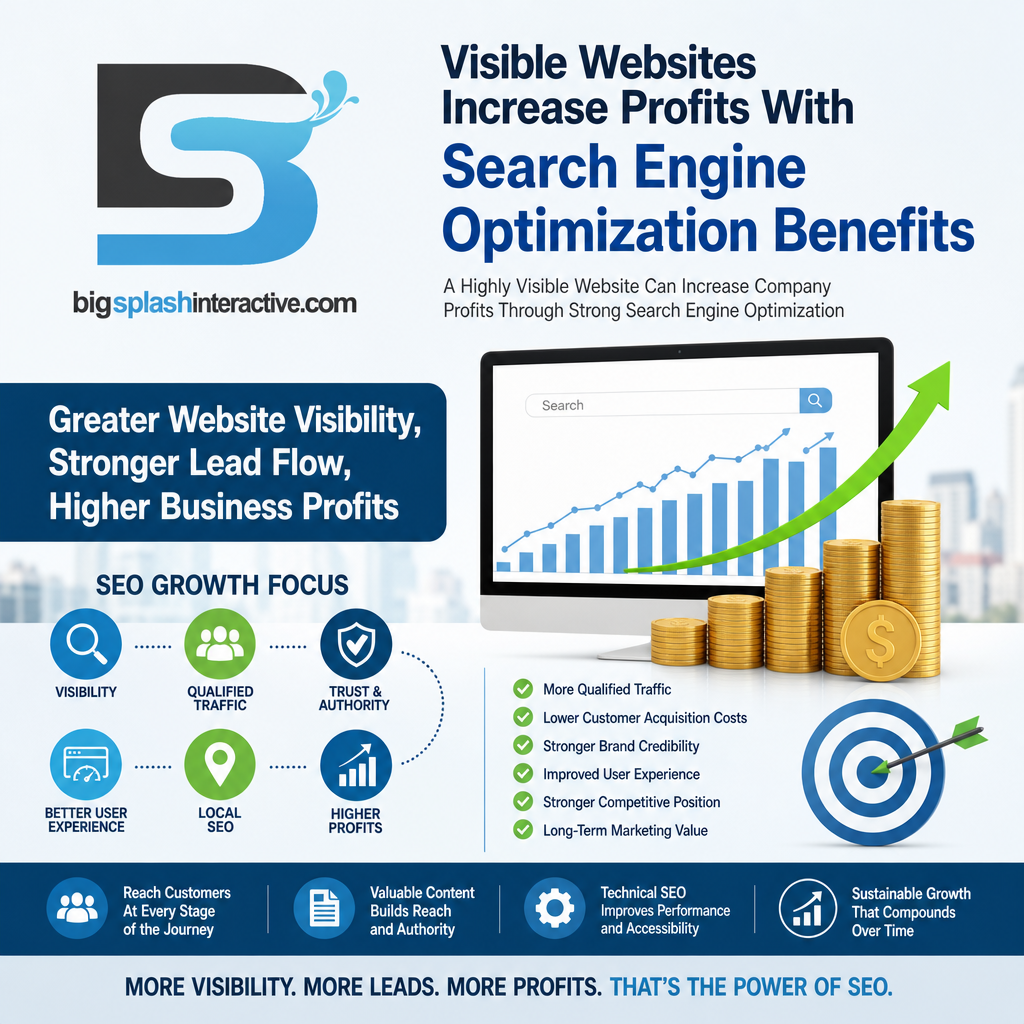
A business website should do more than simply exist. It should attract attention, earn trust, bring in qualified visitors, and support steady revenue growth. When a website is highly visible in search results, it becomes a dependable source of traffic, leads, and sales. Search engine optimization plays a central role in making that happen.
In competitive markets, visibility matters. A company may offer excellent products, responsive service, and fair pricing, yet still struggle to grow if prospective customers cannot find its website. Search engines remain one of the most common starting points for people researching services, comparing solutions, and preparing to make purchases. A visible website places a business in front of that demand at the exact moment potential buyers are looking.
Search engine optimization, commonly referred to as SEO, is the process of improving a website so it performs better in search engine results. This includes strengthening technical performance, refining content, organizing site structure, improving page relevance, and building authority over time. The result is more qualified organic traffic and a stronger digital presence that can directly support company profitability.
For companies that want sustainable growth, SEO offers more than rankings. It creates a framework for attracting people with genuine interest in what the business provides. Those visitors are often closer to taking action because they are actively searching for answers, services, or products. That intent makes search traffic especially valuable compared with less targeted forms of promotion.
When a website appears prominently for relevant search terms, it gains access to a larger share of interested consumers. More visibility typically leads to more visits, more inquiries, and more opportunities to convert interest into revenue. This is one of the clearest ways a highly visible website can increase company profits.
Consider the typical customer journey. A person becomes aware of a need, searches for information, evaluates options, and narrows choices based on trust, clarity, and convenience. If a business appears early in that journey, it has a much stronger chance of shaping the decision. If it is absent from search results, the opportunity often goes to competitors instead.
Visibility also compounds over time. A single optimized page can continue attracting traffic month after month. Multiple optimized pages can create an expanding network of entry points into the website. As the site earns authority and relevance, it becomes more capable of ranking for broader keyword themes, which can increase lead volume and support stronger long-term profits.
SEO supports profit growth in several important ways. It is not limited to traffic generation alone. Strong optimization improves digital performance across the customer acquisition process, from discovery to conversion.
SEO helps a website appear for search phrases used by people already interested in a business category, service, or product. This often results in higher-quality traffic than broad outreach because the user’s intent is more specific and relevant.
Paid advertising can be effective, but each click comes with a direct cost. SEO requires investment, yet strong rankings can continue producing traffic without paying for every visitor. Over time, this can improve marketing efficiency and support better margins.
Users often associate prominent search positions with legitimacy and trust. Appearing consistently for important topics can strengthen brand perception and encourage potential customers to view the business as an established option.
SEO includes improving page speed, mobile usability, navigation, readability, and site structure. These upgrades make it easier for visitors to find information and take action, which can increase conversion rates and customer satisfaction.
When competitors dominate search results, they capture attention, leads, and market share. SEO gives businesses a path to compete more effectively in their category and claim visibility where buying decisions begin.
Well-optimized content can continue generating traffic long after it is published. This creates a durable asset that keeps working for the business and contributes to sustainable profit growth.
A highly visible website does not only serve customers who are ready to buy immediately. It also reaches people at earlier stages of decision-making. Informational pages can attract visitors who are gathering knowledge. Service pages can help those comparing options. Conversion-focused pages can support users prepared to contact the company or complete a purchase.
This broad reach is one of SEO’s greatest strengths. It allows a business to participate in the full customer journey rather than relying on a narrow set of bottom-of-funnel opportunities. By creating content and site experiences aligned with user intent, companies can nurture trust across multiple touchpoints and gradually move prospects closer to a buying decision.
As a result, SEO can influence both immediate and future revenue. Some visitors convert on the first session. Others return later after reading additional content, checking reviews, or discussing options internally. A visible website keeps the business present during this decision cycle and increases the chance of eventual conversion.
Visibility alone is important, but profitability depends on turning that visibility into meaningful action. Effective SEO does not stop at attracting visitors. It also supports conversion by matching search intent with useful content, clear messaging, and intuitive page design.
For example, a service page that ranks well should also explain the service clearly, address common concerns, communicate value, and guide the visitor toward the next step. A product page should make specifications, benefits, pricing details, and purchase actions easy to understand. A location page should help local searchers confirm that the business serves their area and is ready to help.
When these elements work together, organic traffic becomes far more valuable. Instead of simply increasing visitor counts, SEO contributes to lead generation, appointment bookings, quote requests, online orders, and direct revenue. This makes it a practical business investment rather than a purely technical marketing exercise.
For companies serving specific geographic areas, local SEO is especially important. Many consumers search for nearby providers, regional specialists, or businesses in a particular city. If a company is visible in local search results, it can attract people with strong purchase intent and a clear need for service.
Local optimization can support map visibility, location-based rankings, and traffic to important pages related to local offerings. This is highly valuable for service businesses, professional practices, restaurants, retail stores, contractors, and many other organizations that depend on regional demand.
These local visitors often convert at strong rates because their searches are closely tied to real purchasing needs. They may be looking for same-day service, a nearby consultation, a store visit, or a specialized provider within reach. A visible local presence can therefore translate directly into profitable customer acquisition.
One of the most effective parts of SEO is content optimization. Search engines aim to present users with relevant, useful information. Businesses that publish strong, well-structured content create more opportunities to appear in search results for relevant topics.
This content may include service pages, product pages, educational articles, industry insights, frequently asked questions, location pages, and topic-focused resources. Each piece can target a distinct search need while supporting the overall authority of the website.
Over time, a rich content library helps a company reach more audiences, answer more questions, and establish stronger expertise in its field. This can improve rankings, increase user trust, and create a larger organic traffic base that contributes to profit growth.
Even the best content can underperform if a website has technical issues. Technical SEO focuses on the behind-the-scenes factors that affect crawling, indexing, page speed, mobile usability, security, and overall site health. These elements matter to both search engines and visitors.
A technically sound website is easier for search engines to understand and easier for users to navigate. Pages load faster, site architecture is clearer, duplicate content issues are reduced, and important pages are more likely to be discovered and ranked properly. These improvements create a stronger foundation for organic growth.
From a profit standpoint, technical performance has direct value. Slow or confusing websites lose potential customers. In contrast, websites that function smoothly reduce friction and encourage users to stay engaged. This can improve lead quality, conversion rates, and overall return on digital marketing investment.
Paid advertising can deliver immediate exposure, but visibility disappears when the budget stops. SEO works differently. It builds momentum through cumulative improvements in content, authority, technical quality, and user relevance. That momentum can continue benefiting the business long after the initial work is completed.
This lasting value is one of the strongest benefits of search engine optimization. Instead of renting visibility, a business develops an owned digital asset that supports ongoing discovery. Rankings can strengthen brand presence, expand reach, and contribute to repeatable lead flow without requiring the same direct cost per click.
Many businesses achieve the best results by using SEO alongside paid media. Paid campaigns can generate short-term traffic while SEO strengthens long-term organic performance. Together, they can create a balanced growth strategy, but the enduring impact of SEO makes it especially important for sustainable profitability.
Customers rarely choose a company based on visibility alone. They also look for confidence signals. SEO supports trust indirectly by improving site quality, encouraging informative content, and making the business easier to evaluate. A visible website that also communicates expertise and reliability is far more likely to convert visitors into customers.
Trust can be reinforced through well-written service explanations, clear company information, testimonials, case studies, accurate contact details, and a polished user experience. Search visibility brings users in, but trust encourages them to act. This combination is essential for increasing profits from organic traffic.
Businesses that invest in both discoverability and credibility place themselves in a much stronger position than those focused on appearance alone. A professional website backed by effective SEO can become one of the most productive sales tools a company owns.
Another major advantage of SEO is measurability. Businesses can track organic traffic, keyword visibility, landing page performance, conversion actions, user engagement, and other valuable metrics. These insights help decision-makers understand which topics attract the right audience and which pages generate the most business value.
With this data, companies can refine content strategy, improve underperforming pages, strengthen calls to action, and focus resources on the most profitable search opportunities. Rather than guessing which efforts matter, they can use evidence to guide growth decisions.
This level of visibility makes SEO not just a traffic source but also a strategic intelligence tool. It reveals customer interests, common questions, and emerging demand patterns. Those insights can shape broader marketing, sales, and service strategies that contribute to stronger overall profitability.
Every page that ranks well becomes a potential point of entry for future customers. Every relevant search term represents an opportunity to capture attention before a competitor does. Every improvement in user experience can increase the likelihood of conversion. These factors add up to a simple business reality: greater website visibility creates more opportunities to generate profit.
For small businesses, SEO can level the playing field and help them compete against larger companies. For established brands, it can protect market share and expand reach into new categories or regions. For service organizations, it can produce a steady stream of inbound leads. For ecommerce operations, it can support product discovery and online sales growth at scale.
Regardless of industry, a visible website reduces the gap between demand and discovery. It ensures that more of the people searching for relevant solutions have a chance to find the business, learn from it, and choose it.
Company profits are influenced by many factors, but online visibility is now one of the most important. A highly visible website strengthens brand exposure, attracts qualified traffic, improves trust, and increases opportunities for conversion. Search engine optimization is the process that helps make that visibility possible in a strategic, sustainable way.
The benefits of SEO extend well beyond rankings. It supports user experience, lowers long-term acquisition costs, expands content reach, improves technical performance, and positions a business to capture demand at multiple stages of the customer journey. When executed effectively, SEO becomes a growth engine that contributes directly to revenue and profitability.
Businesses that invest in search visibility are investing in discoverability, credibility, and long-term digital performance. In a market where customers begin their decisions online, a highly visible website is not simply an advantage. It is a meaningful driver of business growth and profit.