

Here's a blog you can use on your website:
If you've invested in a website, you've likely heard the term "SEO" countless times. Search Engine Optimization (SEO) is the process of improving your website so it ranks higher in search engine results, drives more traffic, and generates more leads and sales.
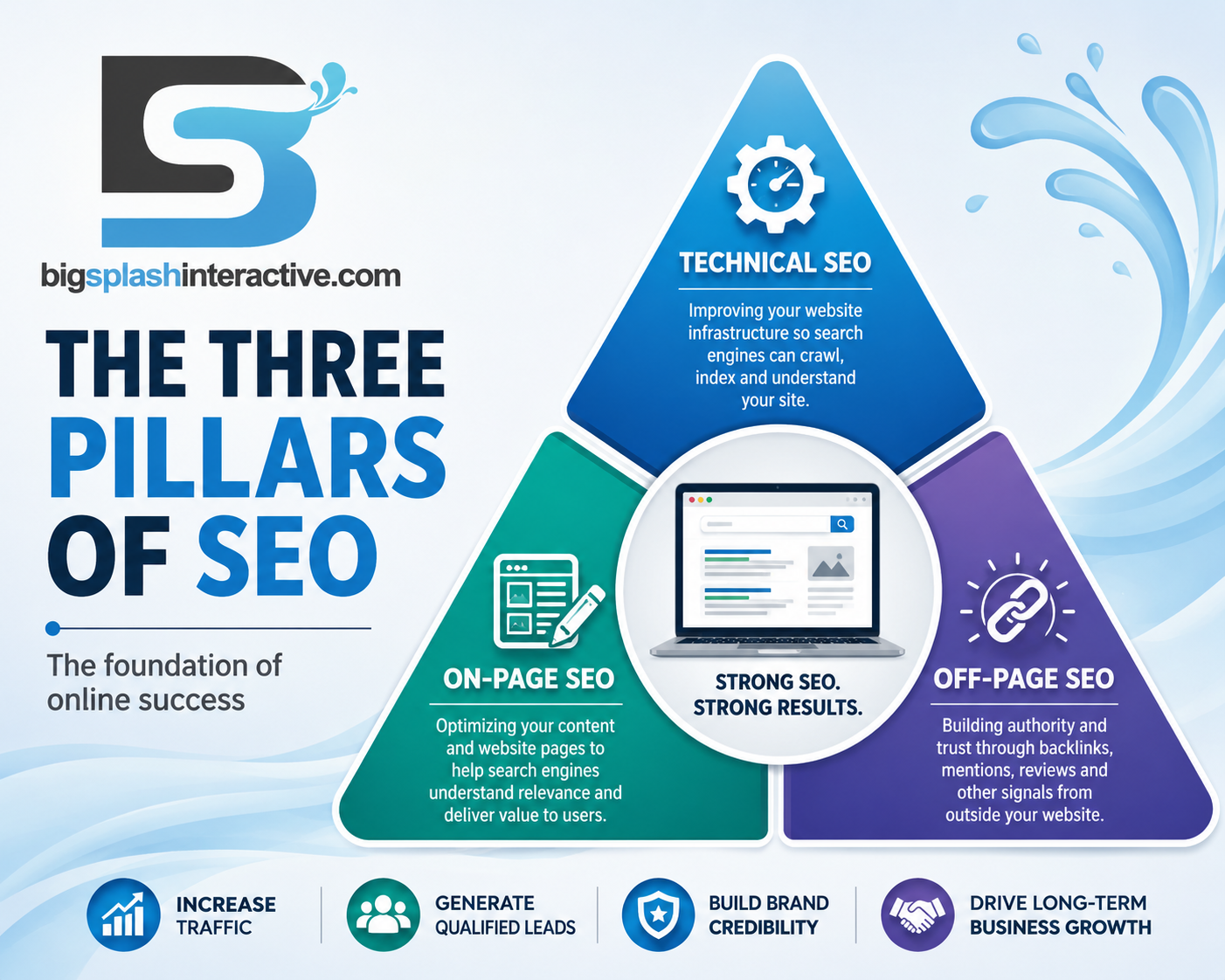
Many business owners think SEO is a single service, but effective SEO is built upon three critical pillars that work together to improve your online visibility. Understanding these pillars can help you see why SEO is such a powerful long-term marketing strategy.
Technical SEO focuses on how well search engines can crawl, understand, and index your website. Think of it as the foundation of a house. If the foundation is weak, everything built on top of it becomes less effective.
Technical SEO includes:
Website speed optimization
Mobile responsiveness
Secure HTTPS connections
Proper site structure and navigation
XML sitemaps
Fixing broken links and errors
Structured data and schema markup
A technically optimized website makes it easier for search engines like Google to understand your content and provide a better experience for visitors. Slow-loading websites or sites with technical issues often struggle to rank regardless of how good their content may be.
On-page SEO focuses on the content and elements that exist directly on your website pages. This pillar helps search engines understand what your business offers and which searches your pages should appear for.
Key on-page SEO elements include:
Keyword research and targeting
Optimized page titles
Meta descriptions
Header tags (H1, H2, H3)
High-quality content
Internal linking
Image optimization
User experience improvements
The goal of on-page SEO isn't simply to insert keywords everywhere. It's about creating valuable content that answers your customers' questions while clearly communicating relevance to search engines.
For example, if you own a landscaping company, your website should contain informative pages about landscaping services, irrigation systems, lawn maintenance, and other topics your potential customers are searching for.
Off-page SEO refers to activities that happen outside your website but impact your search rankings. The most important factor is building authority and trust.
Search engines view backlinks from reputable websites as votes of confidence. When trusted websites link to your content, Google sees your site as more credible and authoritative.
Off-page SEO includes:
Link building
Local business citations
Online reviews
Brand mentions
Social media visibility
Digital PR and outreach
Industry directory listings
Quality matters far more than quantity. A few links from respected industry websites are often more valuable than hundreds of low-quality links.
For local businesses, positive customer reviews and consistent business information across online directories can significantly improve local search visibility.
Many businesses focus on only one aspect of SEO and wonder why they aren't seeing results.
Imagine this scenario:
Great content but poor technical SEO means search engines may struggle to access your site.
Excellent technical SEO but weak content gives visitors little reason to stay or convert.
Strong content and technical optimization but no authority-building efforts can make it difficult to compete against established competitors.
The most successful SEO strategies combine all three pillars into a comprehensive approach.
SEO isn't an overnight solution. It takes time to build authority, create valuable content, and optimize your website. However, unlike paid advertising that stops generating traffic the moment you stop paying, SEO continues delivering value long after the work has been completed.
A well-executed SEO strategy can:
Increase website traffic
Generate qualified leads
Build brand credibility
Improve customer trust
Reduce reliance on paid advertising
Deliver long-term business growth
The three pillars of SEO—Technical SEO, On-Page SEO, and Off-Page SEO—work together to improve your website's visibility and performance. Ignoring any one of these pillars can limit your results.
Businesses that invest in all three areas create a strong foundation for sustainable online growth, making it easier for potential customers to find them when they're ready to buy.
If your website isn't generating the traffic or leads you expected, it may be time to evaluate how well these three pillars are supporting your online presence.